

Are collapsible hoses environmentally friendly?
May 22, 2025
Are collapsible hoses environmentally friendly? This is a question that many eco - conscious consumers are asking these days. As a supplier of Collapsible Hose, I've had in - depth discussions with customers, conducted research, and observed market trends to offer a comprehensive answer.
The Environmental Impact of Traditional Hoses
Before we dive into the environmental friendliness of collapsible hoses, it's essential to understand the drawbacks of traditional hoses. Traditional rubber or vinyl hoses are often made from non - biodegradable materials. Rubber is derived from petrochemicals, and the production process of these materials is energy - intensive. It requires significant amounts of fossil fuels, which contribute to greenhouse gas emissions.
Moreover, traditional hoses are bulky and heavy. This not only makes transportation more difficult but also increases the carbon footprint associated with their delivery. The extra fuel needed to transport these large and heavy items from the manufacturing facility to the retail store or directly to the consumer is a notable environmental concern.
Another issue with traditional hoses is their long - term durability. While some may last a long time, many end up in landfills after a relatively short period due to cracking, leaking, or other forms of damage. Once in landfills, these non - biodegradable hoses can take hundreds of years to break down, further polluting the environment.

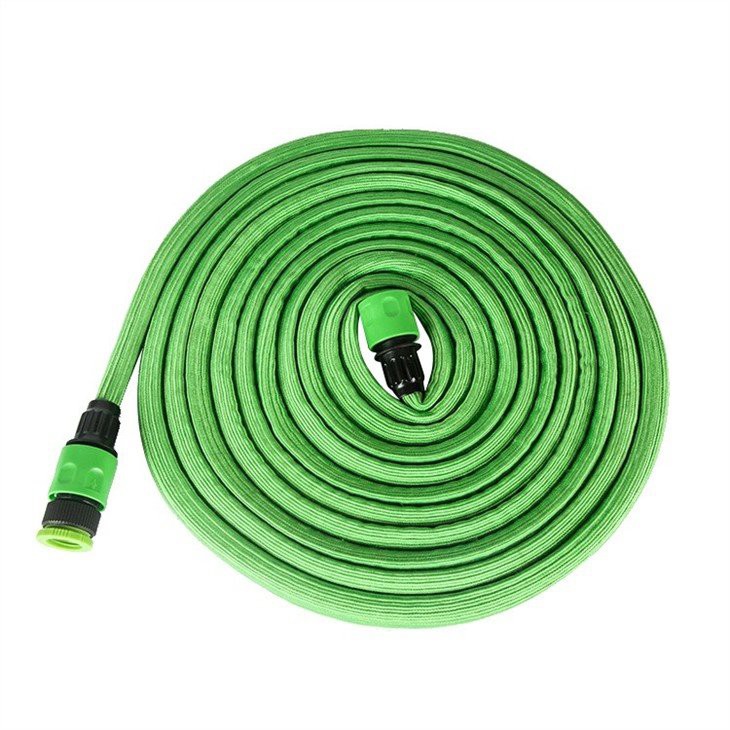
The Environmental Advantages of Collapsible Hoses
Collapsible hoses offer several environmental benefits over their traditional counterparts.
Material and Manufacturing
Most collapsible hoses are made from lightweight and flexible materials such as polyester and latex. Polyester is a synthetic fiber that can be recycled in some cases. Recycling polyester reduces the demand for new raw materials and decreases the energy consumption associated with producing virgin polyester. Latex, on the other hand, is a natural material derived from rubber trees. When sourced sustainably, latex production can have a lower environmental impact compared to petrochemical - based rubber production.
The manufacturing process of collapsible hoses is generally more energy - efficient. Since they are lightweight and require less material to produce, less energy is used in the production process. This results in lower greenhouse gas emissions during manufacturing.
Transportation
One of the most significant environmental advantages of collapsible hoses is their ease of transportation. These hoses are lightweight and can be easily compressed and packed into small spaces. This means that more hoses can be transported in a single vehicle, reducing the number of trips required for delivery. As a result, the carbon emissions associated with transportation are significantly reduced.
Space - Saving and Long - Term Use
Collapsible hoses are designed to be compact when not in use. They can be easily stored in a small shed, garage, or even under a sink. This space - saving feature not only benefits the consumer but also has environmental implications. By taking up less storage space, there is less need for large warehouses or storage facilities, which consume energy for lighting, heating, and cooling.
In terms of durability, high - quality collapsible hoses can last for a long time. They are less prone to kinking and tangling, which reduces the risk of damage. A longer lifespan means that fewer hoses need to be produced and discarded over time, leading to less waste in landfills.
Potential Environmental Concerns
While collapsible hoses have many environmental advantages, there are also some potential concerns that need to be addressed.
Material Degradation
Some collapsible hoses may experience material degradation over time, especially if they are exposed to extreme weather conditions or harsh chemicals. When the materials break down, they can release microplastics into the environment. Microplastics are a growing environmental concern as they can enter the food chain and have harmful effects on wildlife and human health.
Recycling Challenges
Although some of the materials used in collapsible hoses can be recycled, the recycling process may not be straightforward. The combination of different materials in a single hose, such as polyester and latex, can make it difficult to separate and recycle them efficiently. Additionally, not all recycling facilities are equipped to handle these types of materials.
Mitigating Environmental Risks
To address the potential environmental concerns associated with collapsible hoses, several measures can be taken.
Quality Manufacturing
Manufacturers can focus on producing high - quality collapsible hoses that are more resistant to material degradation. By using better - quality materials and advanced manufacturing techniques, the lifespan of the hoses can be extended, reducing the frequency of replacement and waste generation.
Recycling Initiatives
As a supplier, we are actively exploring recycling initiatives. We are working with recycling facilities to develop more efficient methods for recycling collapsible hoses. We also encourage our customers to participate in recycling programs and provide information on how to properly dispose of their old hoses.
Conclusion
In conclusion, collapsible hoses are generally more environmentally friendly than traditional hoses. Their lightweight materials, energy - efficient manufacturing, and space - saving design offer significant environmental benefits. However, there are still some potential concerns, such as material degradation and recycling challenges, that need to be addressed.
As a supplier of Collapsible Hose, we are committed to minimizing the environmental impact of our products. We are constantly researching and developing new ways to improve the sustainability of our collapsible hoses, from using more eco - friendly materials to implementing better recycling programs.
If you are interested in our environmentally friendly collapsible hoses, we invite you to contact us for a procurement discussion. We believe that by working together, we can make a positive impact on the environment while meeting your gardening and watering needs.
References
- EPA. (2023). "Waste Reduction and Recycling".
- Smith, J. (2022). "The Environmental Impact of Hose Manufacturing". Journal of Environmental Science.
- Greenpeace. (2021). "Plastic Pollution and the Environment".